
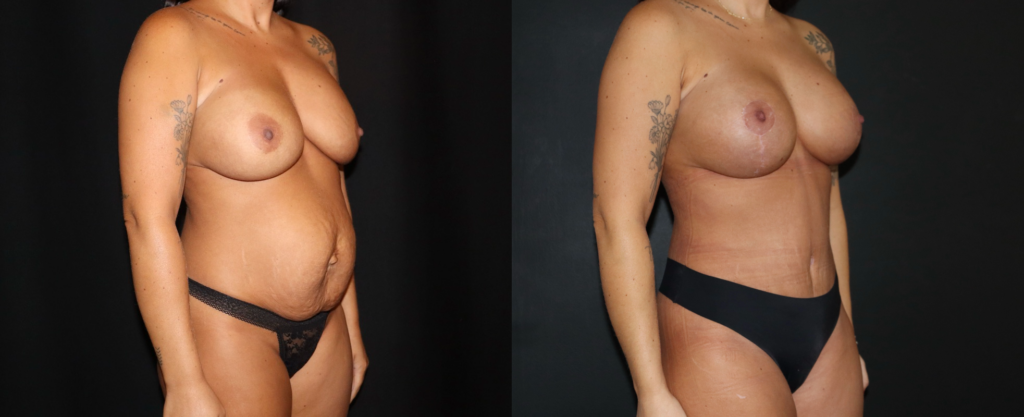
You did the hard part. With the help of a GLP-1 medication like Ozempic, Wegovy, Mounjaro, or Zepbound, you’ve lost 30, 50, maybe 100+ pounds. But now you’re noticing something the medication can’t fix: loose, deflated skin on your abdomen, arms, thighs, breasts, or face.
You’re not alone. At Crantford Costa Plastic Surgery in Charleston, body contouring consultations after GLP-1 weight loss have become one of the most common reasons new patients walk through our doors — and it’s one of the fastest-growing areas of plastic surgery nationwide.
Here’s what every GLP-1 patient in the Lowcountry should know before considering surgery.
Why Doesn’t Skin Bounce Back After GLP-1 Weight Loss?
Short answer: skin stretched by weight gain loses elasticity, and rapid weight loss doesn’t give it time to retract.
GLP-1 medications commonly produce 15–20% total body weight loss — often faster than diet and exercise alone. While fat cells shrink, the skin envelope that stretched to accommodate that weight frequently cannot contract to match your new shape, especially after age 40, pregnancy, or larger weight swings. The result is excess skin and soft tissue laxity that no amount of exercise, creams, or additional weight loss will tighten.
The areas we see most often in Charleston patients:
- Abdomen — hanging skin (a “pannus”) or a deflated, wrinkled midsection
- Arms — loose skin along the upper arms (“bat wings”)
- Breasts/chest — volume loss and sagging in both women and men
- Thighs and buttocks — deflation and skin folds
- Face and neck — the hollowed, aged look often called “Ozempic face”
What Procedures Address Loose Skin After Weight Loss?
There’s no single “post-Ozempic surgery.” The right plan depends on where your laxity is and how much excess skin you have. The most common options include:
Tummy tuck (abdominoplasty). The workhorse of post-weight-loss contouring. It removes excess abdominal skin, repairs stretched or separated abdominal muscles, and flattens the midsection. For many GLP-1 patients, this is the single most transformative procedure.
Liposuction (including VASER). Ideal when stubborn fat pockets remain but skin quality is still good — or as a refinement tool combined with skin-removal procedures. Learn more about what areas liposuction can treat.
Breast lift, with or without implants or fat transfer. Weight loss frequently deflates the breasts. A lift restores shape and position; an implant or fat transfer can restore volume. (Curious about longevity? See Is a Breast Lift Permanent?)
Arm lift (brachioplasty) and thigh lift. These remove hanging skin from the upper arms and thighs — areas where GLP-1 patients often notice laxity first.
Facial rejuvenation. Rapid weight loss deflates the face, too. Options range from fillers and fat transfer for mild volume loss to facelift and neck lift surgery for significant laxity.
Many patients combine procedures — sometimes called a “GLP-1 makeover” — to address multiple areas in a single, carefully planned operation, similar to a mommy makeover.
When Is the Right Time for Surgery After GLP-1 Weight Loss?
Short answer: once your weight has been stable for roughly 3–6 months — usually near your goal weight.
Operating while you’re still losing weight risks a suboptimal result, because continued weight loss after surgery can create new laxity. As a general guide, we like to see:
- Weight stability — within about 5–10 pounds for at least 3–6 months
- Nutritional health — GLP-1s reduce appetite, and some patients become protein-deficient, which impairs healing. We review nutrition (especially protein intake) before surgery.
- Realistic goals and overall health — non-smoker or willing to quit, well-managed medical conditions, and a clear understanding of scars and recovery
Do I Have to Stop Ozempic Before Surgery?
Short answer: usually not entirely — but your surgical and anesthesia team must know you’re taking it.
GLP-1 medications slow stomach emptying, which matters for anesthesia safety. Current multi-society guidance (including the American Society of Anesthesiologists) allows most patients to continue their GLP-1 medication around elective surgery, with precautions such as a clear-liquid diet the day before for higher-risk patients. Every case is individualized — at our practice, your medication plan is coordinated between your surgeon, your anesthesia provider, and the prescriber managing your weight loss. Never adjust your dose on your own before surgery.
Both of our operating rooms are accredited by The Joint Commission, and every procedure is performed with board-certified anesthesia providers — a safety standard worth asking about anywhere you consult.
How Much Does Body Contouring After Weight Loss Cost in Charleston?
Costs vary widely depending on which procedures you need, whether they’re combined, and operating time. As a general range in the Charleston market, single procedures like a tummy tuck or breast lift typically start in the four-figure to low five-figure range, while combination “makeover” surgeries cost more but are often more economical than staging procedures separately (one anesthesia, one recovery). Insurance occasionally covers skin removal (panniculectomy) when documented medical issues like rashes or infections exist — though purely cosmetic contouring is self-pay. We provide exact, personalized quotes at consultation and offer financing options.
What Is Recovery Like?
Most patients take 1–2 weeks off work for a single procedure and 2–3 weeks for combination surgery, with exercise restrictions for about 6 weeks. Our Recovery Hub walks you through what to expect day by day, and our team follows you closely at every stage.
Why Choose Crantford Costa Plastic Surgery?
Body contouring after major weight loss is different from routine cosmetic surgery — skin quality, nutrition, staging, and medication management all change the plan. Dr. Clayton Crantford and Dr. Louis Costa are board-certified plastic surgeons with decades of combined experience, operating in Joint Commission–accredited facilities in historic downtown Charleston. We care for patients from Mount Pleasant, Daniel Island, Summerville, Kiawah, and across the Lowcountry.
If you’ve reached your goal weight — or you’re getting close — a consultation is the best way to map out your options and timing.
Ready to finish your transformation? Call (843) 755-6591 or request a consultation online.
Frequently Asked Questions
Will loose skin after Ozempic go away on its own?
Usually not. Mild laxity in younger patients may improve over 6–12 months, but significant excess skin after major weight loss does not retract on its own. Surgical removal is the only reliable correction.
How long should I wait after stopping or stabilizing on a GLP-1 before plastic surgery?
Most surgeons recommend your weight be stable for at least 3–6 months before body contouring, whether you remain on the medication or not.
Can I stay on my GLP-1 medication after surgery?
In most cases, yes — maintaining your weight is actually important for protecting your surgical result. Your care team will coordinate timing around the operation itself.
What is “Ozempic face” and can it be fixed?
It’s the facial volume loss and sagging that can follow rapid weight loss. Treatment ranges from dermal fillers and fat transfer to facelift surgery, depending on severity.
Is body contouring after weight loss covered by insurance?
Cosmetic contouring is self-pay, but functional skin removal (panniculectomy) is sometimes covered when there are documented medical problems such as chronic rashes or infections. We can help you understand your options.

Dr. Clayton Crantford is a board-certified plastic surgeon and Diplomate of the American Board of Plastic Surgery (ABPS), co-founder of Crantford Costa Plastic Surgery in downtown Charleston, SC. With more than 15 years of experience and fellowship training in complex aesthetic and reconstructive procedures, his areas of expertise include breast augmentation with Motiva implants, facelifts, blepharoplasty, rhinoplasty, tummy tucks, mommy makeovers, and liposuction.
Dr. Crantford integrates advanced tools such as Crisalix 3D imaging and ERAS Rapid Recovery protocols to deliver natural-looking results with smoother recoveries. His surgical facility is accredited by The Joint Commission, meeting the highest national standards for patient safety.
Voted Best Plastic Surgeon in Charleston in 2024, Dr. Crantford is known for his meticulous technique and a warm, patient-centered philosophy of "enhancement, not transformation."


