
When comparing breast lift vs augmentation, understanding the breast lift vs augmentation differences is essential for choosing the right procedure. Medically reviewed by Clayton Crantford, Board-Certified Plastic Surgeon
Last updated: February 17, 2026
Key Takeaways
Breast augmentation adds volume; breast lift addresses sagging by repositioning tissue and reshaping the breast contour.
Many patients benefit tremendously from combining both procedures (augmentation with mastopexy) for optimal lifted and fuller appearance.
Your ideal procedure depends on your starting anatomy, tissue quality, skin elasticity, and aesthetic goals.
Recovery timelines and costs differ significantly between procedures—understanding these helps with informed decision-making.
A comprehensive consultation with a board-certified surgeon ensures you receive the right procedure customized for your needs.
Decision-making should be based on your anatomy and goals, not budget—choosing the wrong procedure wastes time and money.
Breast Lift vs Augmentation: Understanding Your Options
One of the most common and important questions patients ask during consultations is: ‘Do I need a breast lift vs augmentation?’ Many patients have difficulty articulating their exact concerns, saying things like ‘My breasts don’t look as full as they used to’ or ‘They’ve drooped, but I don’t want to look like I have implants.’ These descriptions suggest different underlying issues requiring different surgical approaches.
The answer isn’t always simple because these procedures address different anatomical concerns and sometimes work best together. This comprehensive guide explains the fundamental differences between breast lift and augmentation, helps you understand your candidacy for each procedure, discusses the possibility of combining both approaches, and provides a framework for making the right decision with your surgeon. By the end, you’ll understand whether you need volume restoration, shape improvement, or both—and the surgical solutions that will deliver your desired results.
Understanding Each Procedure: What They Do and Don’t Do
Breast Augmentation: Adding Volume
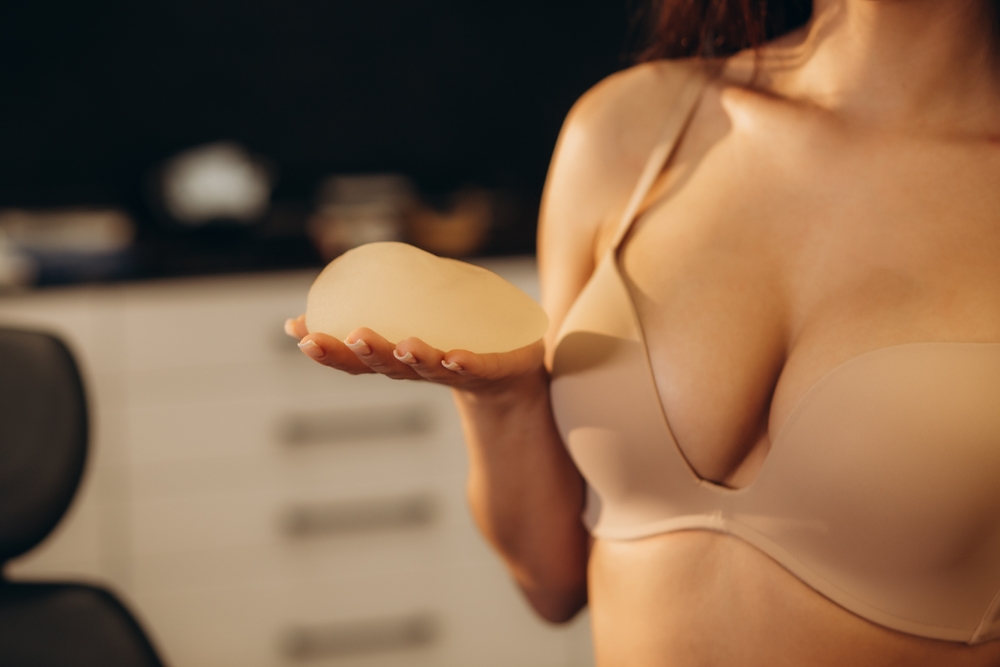
Breast augmentation, also called augmentation mammaplasty, increases breast size and fullness by placing implants behind breast tissue or beneath the chest muscle. Augmentation specifically addresses:
Insufficient natural breast volume from genetics, development, or tissue characteristics.
Loss of volume due to pregnancy, breastfeeding, weight loss, or aging.
Asymmetry where one breast is noticeably smaller than the other.
Desire for fuller, more prominent breasts with enhanced projection.
Restoration of youthful breast appearance in aging or post-pregnancy patients.
What augmentation does NOT do: Augmentation does not address or correct sagging. In fact, if your breast is already sagging, adding weight via implants can worsen the drooping appearance by pulling tissue downward. Augmentation creates volume—it does not reposition or reshape tissue to address ptosis (medical term for breast drooping). If sagging is your primary concern, a lift is the appropriate solution. If you have both low volume AND sagging, a combined procedure addresses both concerns optimally.
Breast Lift: Repositioning and Reshaping
A breast lift, medically called mastopexy, removes excess skin and repositions breast tissue to a higher, more youthful position on the chest. The procedure reshapes the breast and restores definition and perkiness that may have been lost to gravity and aging. Lift specifically addresses:
Ptosis or breast drooping—breasts that sit lower on the chest than desired.
Loss of upper breast fullness or upper pole definition that characterizes youthful breasts.
Stretched or enlarged areolas that have enlarged due to skin stretching.
Nipple position that has dropped below the inframammary fold (the natural crease beneath the breast).
Loss of breast projection and the ‘perkiness’ that defines attractive breast contours.
Sagging that occurs after pregnancy, weight loss, or with aging and gravity.
What lift does NOT do: A lift does not significantly increase breast volume. If adequate volume is present but the breast has drooped, a lift provides beautiful rejuvenation without implants. However, if volume is also insufficient—a common situation in post-pregnancy or post-weight-loss patients—augmentation combined with lift provides optimal results. A lift alone cannot restore volume lost due to pregnancy or aging; implants are required for that restoration.
Who is an Ideal Candidate: Assessment Framework
Ideal Candidates for Breast Augmentation Alone
You may be an ideal candidate for augmentation alone if you have:
Adequate breast tissue with minimal or no sagging—your breasts sit where you want them positionally.
Nipple position at or above the inframammary fold—no drooping present.
Desire for increased volume and fullness rather than repositioning.
Good skin elasticity that will accommodate increased volume without stretching excessively.
No significant asymmetry requiring correction beyond volume adjustment.
Realistic expectations that augmentation adds volume but doesn’t address positioning.
If this describes you, augmentation alone can deliver beautiful results without additional surgical complexity.
Ideal Candidates for Breast Lift Alone
You may be an ideal candidate for breast lift alone if you have:
Significant breast sagging (ptosis grade 2-3 on medical scale) that bothers you cosmetically.
Adequate or excess breast volume but poor positioning—the concern is shape, not size.
Nipples positioned noticeably below the inframammary fold requiring repositioning.
Loss of upper breast fullness and definition that you wish to restore.
Desire to appear more youthful without implants—rejuvenation through repositioning.
Not seeking significant volume increase—happy with your natural volume if properly positioned.
Healthy tissue quality and good healing capacity for the lift procedure.
A lift can provide dramatic rejuvenation for appropriately selected patients, creating a more youthful breast appearance through repositioning and reshaping without adding implants.
Ideal Candidates for Combined Procedure (Augmentation with Lift)
Many patients benefit tremendously from combined augmentation and lift, often called ‘augmentation with mastopexy.’ This combined approach is ideal if you have:
Significant sagging combined with insufficient volume—you need both lift AND volume.
Desire for both lifted AND fuller appearance—combination delivers both goals.
Post-pregnancy or post-weight-loss changes affecting both volume AND position.
Aging-related changes causing loss of both volume and lift—combination restores youthfulness.
Asymmetry requiring both volume adjustment AND repositioning for balance.
Willingness to accept longer operative time and slightly extended recovery for comprehensive rejuvenation.
Understanding that combination procedure addresses multiple concerns in a single surgical session.
Combined procedures are increasingly popular as patients recognize that addressing both concerns simultaneously yields more satisfying comprehensive results than addressing only one concern or staging procedures months apart.
Can You Combine Both Procedures? The Augmentation with Lift Option
Absolutely, yes. In fact, for many patients with combined concerns, combining augmentation and lift in a single surgical session delivers superior results compared to either procedure alone. Here’s what you should know about combined surgery:
Comprehensive Results: Creates lifted, fuller breasts achieving multiple goals simultaneously.
Single Recovery: One recovery period instead of multiple separate recoveries months apart.
Integrated Scarring: Scar patterns are coordinated (typically inframammary plus vertical or anchor pattern).
Operative Time: Extended duration (2.5-3.5 hours) compared to single procedures, requiring longer anesthesia.
Surgical Complexity: Requires surgeon expertise in both lift and augmentation techniques.
Recovery Timeline: 6-8 weeks before full activity clearance (vs. 4-6 weeks for augmentation alone).
Results Satisfaction: High patient satisfaction as both lifting and fullness goals are addressed.
Cost Consideration: More economical than two separate surgical sessions and recovery periods.
During your consultation at CC Plastic Surgery, Dr. Crantford will assess whether combination surgery is appropriate and beneficial for your specific anatomy and goals. Sometimes combined surgery is ideal; other times a single procedure delivers optimal results. His recommendation is based on thorough evaluation rather than maximizing surgical complexity.
Key Differences: Side-by-Side Comparison Table
| Aspect | Breast Augmentation | Breast Lift | Combined Procedure |
|---|---|---|---|
| Primary Goal | Increase volume and fullness | Address sagging, reposition tissue | Lift breasts AND add volume |
| Best For Patients With | Low volume, no sagging | Sagging, adequate volume | Low volume PLUS sagging |
| Operative Time | 1-1.5 hours | 1.5-2 hours | 2.5-3.5 hours |
| Incision Pattern | Inframammary or periareolar | Anchor, vertical, or periareolar | Multiple incision patterns |
| Scarring Extent | Hidden in breast fold | Visible but fading (multiple scars) | Multiple incision sites |
| Recovery Time | 4-6 weeks full activity | 6-8 weeks full activity | 8-10 weeks full activity |
| Implants Needed | Yes (silicone or saline) | No implant required | Yes (if combining with aug) |
| Cost Range | $6,500-12,000 | $7,000-12,000 | $12,000-18,000 |
| Long-Term Durability | 10-20+ years (implants) | Permanent repositioning | Permanent + implant durability |
| Revision Potential | Implant change common | Rare if satisfied | May revise implants only |
This table illustrates the fundamental differences between procedures. Your optimal choice depends on your specific anatomy and goals.
Recovery Comparison: Timeline and Activity Restrictions
Breast Augmentation Recovery Progression
Weeks 1-2: Light activity only; minimize arm movement; swelling peaks then begins resolving.
Weeks 3-4: Gradual return to normal activities; avoid heavy lifting and strenuous exercise.
Weeks 4-6: Cleared for exercise with gradual progression; implants settling; most people feel nearly normal.
Months 3-6: Final results as swelling completely resolves and implants settle into final position.
Breast Lift Recovery Progression
Weeks 1-3: Strict activity restriction; incision care is critical to prevent complications.
Weeks 3-6: Gradual progression; longer healing required due to lift incision complexity.
Weeks 6-8: Return to normal activities and light exercise as incisions solidify.
Months 2-3: Final contour as scars mature and residual swelling completely resolves.
Note: Lift requires more cautious recovery than augmentation due to multiple incisions.
Combined Procedure Recovery Progression
Weeks 1-3: Most restrictive recovery; multiple incisions require careful healing.
Weeks 3-6: Cautious progression; incision sites need continued protection.
Weeks 6-8: Gradual return to normal activities as incisions stabilize.
Weeks 8-10: Exercise clearance pending incision healing assessment.
Months 3-4: Final results as implants settle and lift contours fully resolve.
Note: Combined recovery is longer but single recovery beats multiple separate recoveries.
Cost Comparison and Financial Planning
Understanding financial investment helps with planning and decision-making:
Breast Augmentation: $6,500-$12,000 depending on implant type, surgeon, and facility.
Breast Lift: $7,000-$12,000 depending on lift technique, surgeon, and facility.
Combined Procedure: $12,000-$18,000 for comprehensive augmentation and lift.
Financing Available: Payment plans through healthcare lenders make procedures accessible.
While combined procedures have higher upfront cost, they offer value by avoiding two separate surgeries, two anesthesia events, and two separate recovery periods months apart. Many patients find combined procedures more economical and convenient than staged procedures. Discuss financing options during your consultation.
Decision-Making Guide: How to Determine Your Ideal Procedure
Use this framework to clarify your needs before consulting with Dr. Crantford:
Honest Assessment Questions
How do I feel about my breast volume? Too small, adequate, or even too large?
Do my breasts sag or droop, or do they sit where I want them positionally?
Where is my nipple positioned relative to my inframammary fold?
What is my PRIMARY concern: insufficient size, poor positioning (sagging), or both?
Would I prefer one comprehensive procedure or multiple staged procedures?
What recovery timeline works best for my schedule and life circumstances?
What is my budget, and do I have financing options available?
Am I willing to have visible scars (lift) for repositioning, or do I prefer minimal scarring (augmentation)?
Have I tried non-surgical options, and am I committed to surgical results?
Decision Flowchart
Follow these logic pathways:
IF adequate volume + minimal/no sagging → AUGMENTATION ALONE is ideal
IF low volume + significant sagging → COMBINED AUGMENTATION + LIFT is ideal
IF good volume + moderate to significant sagging → LIFT ALONE is appropriate
IF good volume + minimal sagging + some fullness loss → MINI LIFT or light augmentation to consider
IF unsure → CONSULTATION with Dr. Crantford clarifies anatomy and options
Real Considerations by Age, Body Type, and Life Stage
Patients in Their 20s-30s
Younger patients typically have excellent skin elasticity and minimal sagging. Most benefit from augmentation alone if volume is the concern. Lift is uncommon unless pregnancy-related changes have occurred. Starting with augmentation allows for future lift if needed; reversing a lift is more complex. These patients typically have longer implant longevity ahead.
Patients in Their 40s-50s
This age group commonly presents with combined concerns: loss of volume from aging and hormonal changes, plus gradual sagging from gravity and decreased collagen. Combined augmentation and lift often provides the most satisfying rejuvenation, creating naturally youthful breasts addressing both concerns. This age group often reports exceptional satisfaction with combined procedures.
Post-Pregnancy Patients
Pregnancy causes significant changes: volume loss from hormonal changes, stretching of skin envelope, and sagging from weight changes. Many post-pregnancy patients benefit from combined procedures, though some wait until breastfeeding is complete. Timing is individual but combined procedures address typical post-pregnancy changes comprehensively.
Post-Weight-Loss Patients
Significant weight loss (50+ pounds) often leaves loose skin and minimal volume. Combined augmentation and lift addresses both concerns. Many post-weight-loss patients pursuing body contouring benefit from comprehensive breast rejuvenation alongside abdominoplasty or body lift. CC Plastic Surgery has extensive experience with post-weight-loss body contouring.
Athletic or Lean Body Types
Patients with lean frames and minimal natural breast tissue often pursue augmentation for projection and fullness. Sagging is uncommon in lean patients unless from significant life events. Lift is typically not necessary in lean body types unless specific ptosis is present. Augmentation creates more dramatic visual change in lean frames.
Frequently Asked Questions
<h3 class="wp-block-heading" id="can-a-breast-lift-increase-breast-size?</strong></h3> <p>Lift repositions tissue higher on the chest, which may create the appearance of slightly increased fullness in the upper breast. However, it doesn't increase actual tissue volume. If true size increase is desired, augmentation is necessary.</p>Will a breast lift scar my breasts permanently?
Lift scars do fade significantly over 12-18 months, becoming much less noticeable. Most scars become quite inconspicuous. Scar visibility depends on your individual healing tendency and your surgeon’s technique. Dr. Crantford uses advanced techniques to minimize scarring.
If I get a lift now, will I eventually need augmentation?
Not necessarily. Some patients are satisfied with lift results long-term. However, some patients eventually desire volume addition. This can be addressed with future augmentation if desired—it’s reversible in that sense.
Which procedure has more downtime?
Lift typically requires more downtime (6-8 weeks full recovery) than augmentation alone (4-6 weeks) due to longer incisions and more extensive tissue handling. Combined procedures have recovery similar to lift.
Can implants help with sagging?
Implants provide upper pole fullness and slight lift appearance due to their shape. However, implants don’t correct significant sagging or reposition tissue lower on the chest—lift surgery accomplishes this.
What if I have severely deflated breasts after pregnancy?
Combined augmentation and lift is often the ideal solution addressing both volume loss and sagging. Your surgeon will assess your anatomy and recommend the best approach for comprehensive rejuvenation.
How long do results last?
Lift results are permanent regarding tissue repositioning, though gravity and aging continue over time. Implants typically last 10-20+ years. Combined procedure results are quite durable.
Can I still breastfeed after these procedures?
Most women can breastfeed successfully after either procedure. Inform your surgeon about breastfeeding plans, as incision placement may be optimized for this goal.
Is one procedure safer than the other?
Both are safe when performed by board-certified surgeons in accredited facilities. Risks differ: augmentation has implant-specific risks; lift has scar-related risks. All are manageable with proper technique and care.
What does Dr. Crantford typically recommend?
Recommendations are individualized based on thorough evaluation. Dr. Crantford combines clinical expertise with your aesthetic goals to recommend the optimal approach—sometimes augmentation, sometimes lift, sometimes both.
Ready to take the next step? Schedule your consultation at CC Plastic Surgery + Skin Clinic by calling (843) 380-6992 or visiting ccplastics.com.
Dr. Clayton Crantford is a board-certified plastic surgeon at CC Plastic Surgery + Skin Clinic in Charleston, SC. With a commitment to personalized care and surgical excellence, Dr. Clayton Crantford helps patients achieve their aesthetic goals safely and beautifully. CC Plastic Surgery is the only Joint Commission-accredited plastic surgery practice in Charleston and has been voted ‘Best of Charleston’ for 2024-2025.

Dr. Clayton Crantford is a board-certified plastic surgeon and Diplomate of the American Board of Plastic Surgery (ABPS), co-founder of Crantford Costa Plastic Surgery in downtown Charleston, SC. With more than 15 years of experience and fellowship training in complex aesthetic and reconstructive procedures, his areas of expertise include breast augmentation with Motiva implants, facelifts, blepharoplasty, rhinoplasty, tummy tucks, mommy makeovers, and liposuction.
Dr. Crantford integrates advanced tools such as Crisalix 3D imaging and ERAS Rapid Recovery protocols to deliver natural-looking results with smoother recoveries. His surgical facility is accredited by The Joint Commission, meeting the highest national standards for patient safety.
Voted Best Plastic Surgeon in Charleston in 2024, Dr. Crantford is known for his meticulous technique and a warm, patient-centered philosophy of "enhancement, not transformation."


