
Breast BEFORE & AFTER Patient 189: Motiva Preservé Breast Augmentation
*Keep in mind that each patient is unique and your results may vary.
Before & After
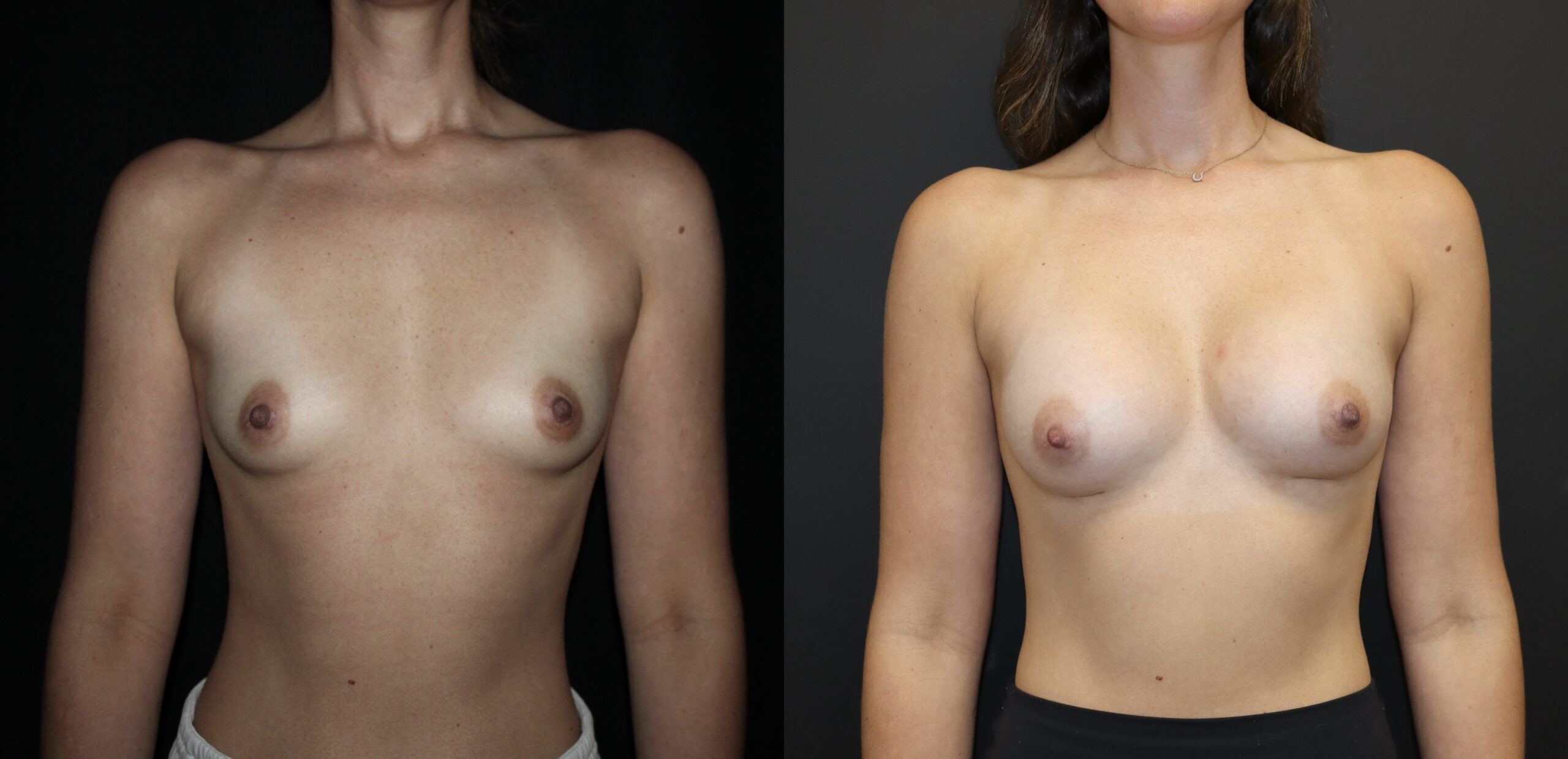
A 34-year-old female patient presented seeking a subtle, natural breast enhancement that would improve volume while maintaining proportion with her body. After a comprehensive consultation with Dr. Crantford at Crantford Costa Plastic Surgery in Charleston, South Carolina, she elected to undergo bilateral breast augmentation using the Motiva Preservé tissue-preserving technique with 185cc Motiva Ergonomix SmoothSilk (ERSM) implants. The procedure was performed to achieve a soft, natural-looking result while minimizing disruption to the surrounding breast tissue and supporting a comfortable recovery. Photos are shown at 7 weeks post-op.
The Motiva Preservé approach is designed for patients seeking a smaller, more understated enhancement, using a tissue-sparing surgical technique intended to reduce trauma to breast tissue, nerves, and blood supply compared to conventional augmentation. This can translate to a more comfortable early recovery and a soft, natural result that closely follows the patient’s existing anatomy. At 7 weeks post-op, this patient shows improved volume and a proportionate, natural-looking outcome consistent with the goals of the Preservé technique.
What makes the Motiva Preservé technique different from traditional breast augmentation?
The Motiva Preservé technique uses a tissue-preserving surgical approach designed to minimize disruption to breast tissue, nerves, and blood supply during implant placement. It’s typically used with smaller implant sizes for patients who want a subtle, natural-looking enhancement with a gentler recovery.
Is Motiva Preservé right for every breast augmentation patient?
This technique tends to suit patients seeking smaller, more conservative volume increases and a very natural result. Patients seeking significantly larger implants or those needing additional procedures like a lift may be better suited to a different surgical approach, which Dr. Crantford will discuss during consultation.