
Blepharoplasty BEFORE & AFTER Patient 154: Blepharoplasty
*Keep in mind that each patient is unique and your results may vary.
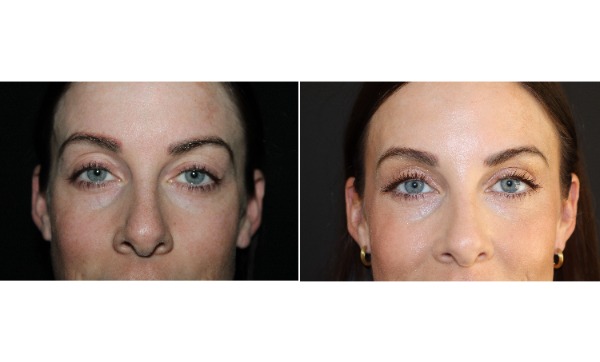
Before & After
A 34-year-old female patient presented with concerns of upper eyelid heaviness. After clinical evaluation, she elected to undergo an upper blepharoplasty to improve eyelid contour and restore a more refreshed look. This procedure was performed by Dr. Crantford in Charleston, South Carolina. Photos are shown at 10 weeks post-op.
Upper blepharoplasty addresses excess skin and tissue along the upper eyelids that can create a heavy, tired appearance — often one of the earliest visible signs of facial aging. Patients who come to Dr. Crantford at Crantford Costa Plastic Surgery in Charleston, SC, frequently describe feeling like their eyes look fatigued or droopy despite feeling rested. Before-and-after photos from this procedure typically show a more open, alert eye appearance with a cleaner upper eyelid contour and a naturally refreshed overall look.
What is upper blepharoplasty?
Upper blepharoplasty is a surgical procedure that removes excess skin and, when necessary, underlying tissue or fat from the upper eyelids. It is performed to correct hooding or heaviness that can make the eyes appear tired or aged, restoring a more open and refreshed appearance.
Will upper blepharoplasty make me look dramatically different?
Upper blepharoplasty is designed to refresh and restore rather than dramatically alter your appearance. Most patients find that their results look natural — friends and family often notice they look more rested without being able to pinpoint exactly why.
How long after upper blepharoplasty do final results show?
Initial swelling and bruising typically resolve within 2–3 weeks. Final results, including full softening of the incision line and complete settling of the eyelid contour, are typically visible at 3 to 6 months post-op.
Is upper blepharoplasty ever covered by insurance?
In some cases, upper blepharoplasty may be partially covered by insurance if excess eyelid skin is determined to be obstructing the field of vision. A formal visual field test is typically required to establish medical necessity. Dr. Crantford’s team can help guide patients through this evaluation process.
What is recovery like after upper blepharoplasty?
Most patients experience mild swelling and bruising in the first 1–2 weeks, which can be managed with cold compresses and keeping the head elevated. Patients typically return to light activity within a week and resume normal daily routines shortly after. Strenuous activity is usually restricted for 3–4 weeks to support optimal healing.