
Blepharoplasty BEFORE & AFTER Patient 175: Upper Blepharoplasty
*Keep in mind that each patient is unique and your results may vary.
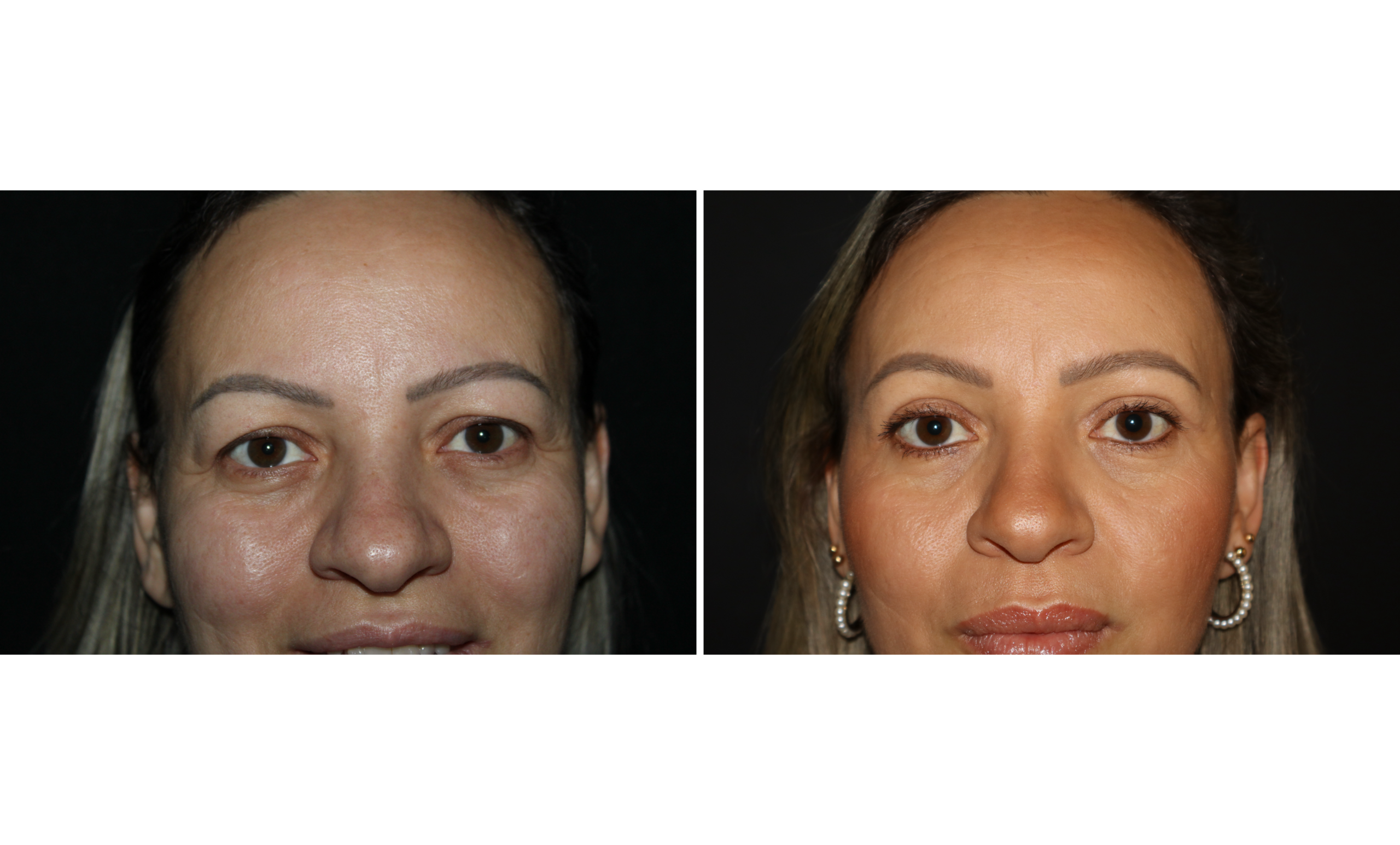
Before & After
A 44-year-old female patient presented with concerns regarding excess upper eyelid skin that was affecting her eyelid contour and contributing to a tired appearance. After a thorough consultation and evaluation, the patient elected to undergo upper blepharoplasty at Crantford Costa Plastic Surgery in Charleston, South Carolina. Dr. Crantford performed the procedure to remove the excess skin and improve eyelid definition, resulting in a more rested and rejuvenated appearance. Photos are shown at 8 weeks post-op.
Upper blepharoplasty delivers one of the highest satisfaction rates in facial plastic surgery — in part because the improvement it creates tends to look completely natural. Unlike procedures that add volume or change proportions, blepharoplasty works by restoring what was there before: a defined eyelid crease, a more open eye, and a rested, refreshed expression.
What does upper blepharoplasty address?
Upper blepharoplasty removes excess skin from the upper eyelids, and occasionally a small amount of herniated fat, to improve eyelid contour, reduce heaviness or hooding, and restore a more open, alert appearance. The procedure can also address functional concerns in cases where excess skin encroaches on the visual field. Dr. Crantford evaluates both aesthetic and functional aspects of the upper eyelid during the consultation.
How long after upper blepharoplasty do final results show?
Most patients see their final upper blepharoplasty results at 3 to 6 months post-op, once residual swelling and bruising have fully resolved. Initial improvement is visible within the first two weeks, swelling resolves relatively quickly in the eyelid area compared to other facial procedures, and the result continues to refine over the following months.
What is recovery like after upper blepharoplasty?
Recovery from upper blepharoplasty is generally well-tolerated. Most patients experience bruising and swelling around the eyes for 1 to 2 weeks. Sutures are typically removed within the first week, and most patients feel comfortable returning to work and social activities within 7 to 10 days. Strenuous activity and anything that raises blood pressure to the eyes, such as heavy lifting, is typically restricted for 2 to 3 weeks.
Can upper blepharoplasty be combined with other facial procedures?
Yes. Upper blepharoplasty is frequently performed in combination with other facial rejuvenation procedures such as a facelift, lower blepharoplasty, or brow lift, depending on the patient’s overall facial aging concerns. Combining procedures allows patients to address multiple areas of the face in a single recovery period. Dr. Crantford discusses combination options during the consultation based on each patient’s individual goals.