
Face BEFORE & AFTER Patient 179: Facelift
*Keep in mind that each patient is unique and your results may vary.
Before & After
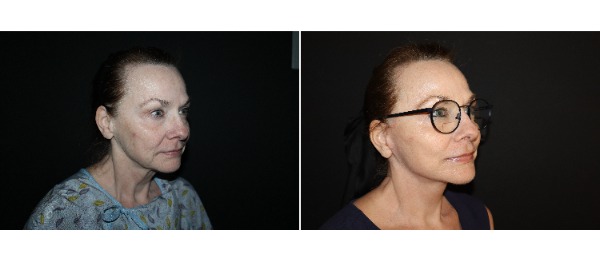
A 63-year-old female patient presented with concerns regarding visible signs of facial aging, including laxity and descent of facial tissues that had affected her facial contour and overall appearance. After a thorough consultation and evaluation, the patient elected to undergo a facelift at Crantford Costa Plastic Surgery in Charleston, South Carolina. Dr. Costa performed the procedure to improve facial contour and achieve a more refreshed, natural appearance. Photos are shown at 8 weeks post-op.
Facelift surgery for patients in their early 60s is among the most rewarding in facial plastic surgery — patients typically have meaningful structural aging to address, but retain enough tissue quality and elasticity for the result to look naturally lifted rather than tightened. Dr. Costa’s approach prioritizes restoring the facial contour of an earlier version of the patient, rather than producing a look that appears inconsistent with their age. Before-and-after photos at 8 weeks reflect significant improvement in tissue position and facial contour, with continued refinement expected through the 6 to 12 month mark.
What does a facelift address in the 63-year-old age range?
For patients in their early 60s, a facelift most commonly addresses jowling along the jawline, descent of the midface and cheek fat pads, deepening of the nasolabial folds, and general skin laxity across the lower face and neck. The surgical approach is tailored to the degree and pattern of each patient’s aging, with some patients benefiting from a full facelift and others being better candidates for a lower or deep plane approach.
How long does a facelift last?
Facelift results typically last 7 to 10 years, though individual results vary depending on factors like skin quality, genetics, sun exposure, and lifestyle. The structural improvements made during surgery are long-lasting; the face will continue to age naturally after the procedure, but from a more youthful baseline. Many patients elect to undergo a secondary procedure years later to maintain their results.